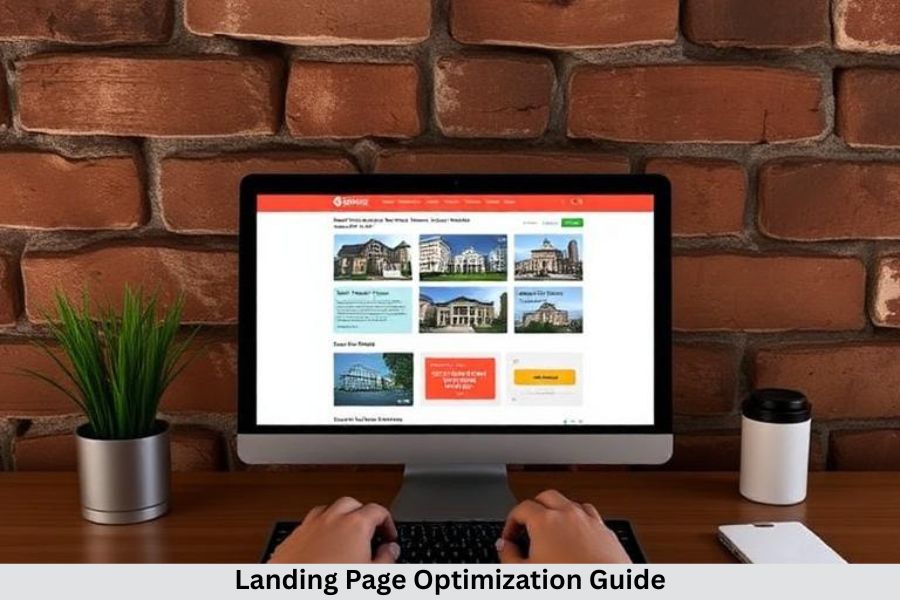
A landing page is a standalone web page designed with a single goal: converting visitors into leads, subscribers, or customers. Unlike a traditional website homepage that offers multiple navigation paths, a landing page is focused and distraction-free. When someone clicks on an advertisement, social media link, or email campaign, they are typically directed to a landing page specifically designed for that campaign.
Think of a landing page like a salesperson who never sleeps. Instead of speaking to thousands of potential customers individually, the page communicates your message automatically and guides visitors toward one clear action. That action could be signing up for a newsletter, downloading an eBook, registering for a webinar, or purchasing a product.
Landing pages have become an essential part of digital marketing because they help businesses control the user journey. Instead of sending visitors to a general website where they may get distracted, a landing page keeps the focus on a specific offer. This targeted approach dramatically increases the likelihood that visitors will take the desired action.
Another important aspect is the ability to track performance. Because landing pages are tied to specific campaigns, marketers can measure how effective each campaign is. Metrics such as conversion rate, bounce rate, and time on page reveal whether the page is convincing enough. If it isn’t performing well, marketers can optimize the page through testing and improvements.
A well-optimized landing page works like a conversion machine. Every element—from the headline to the button color—plays a role in persuading visitors to take action. Understanding this foundation is the first step toward mastering landing page optimization.
Why Landing Pages Are Essential for Conversions
Landing pages are powerful because they remove distractions and guide visitors toward a single decision. When users arrive on a homepage with dozens of links and options, they often feel overwhelmed and leave without taking action. A focused landing page solves this problem by presenting one clear message and one clear goal.
Research shows that landing pages convert significantly better than other types of sign-up methods, with an average conversion rate around 6.6% across industries. This means that for every 100 visitors, roughly six or seven may take the desired action. High-performing landing pages can achieve conversion rates above 10%, placing them in the top tier of performance.
These numbers reveal something important: even small improvements can produce massive business results. If a company increases its conversion rate from 3% to 6%, it effectively doubles its leads without spending more money on traffic. That’s the true power of optimization.
Landing pages also allow businesses to tailor their message to specific audiences. For example, a company might create separate pages for different advertising campaigns, industries, or customer segments. Each page speaks directly to the needs and pain points of that audience, making the offer more compelling.
Another benefit is data-driven improvement. Because landing pages are measurable, marketers can experiment with different headlines, layouts, images, and offers. Over time, these small adjustments accumulate into significant performance gains.
In digital marketing, traffic is expensive. Whether it comes from paid ads, SEO, or social media, every visitor represents an opportunity. Landing page optimization ensures that businesses make the most of that opportunity by turning more visitors into real customers.
Key Statistics That Show the Importance of Landing Page Optimization
Average Landing Page Conversion Rates
Understanding conversion benchmarks helps marketers evaluate whether their landing pages are performing well or need improvement. Across industries, studies show that the average landing page conversion rate ranges between 2.35% and 6.6%, depending on the dataset and industry segment.
However, averages can be misleading. Some industries naturally achieve higher conversion rates than others due to differences in audience intent. For example, event registration pages or webinar sign-ups often convert much higher because visitors already have strong interest in the offer.
High-performing landing pages usually fall into the top 10% bracket with conversion rates above 10%. Achieving these numbers requires careful optimization of design, messaging, and user experience.
Another fascinating insight is how traffic sources affect conversions. Email campaigns tend to generate some of the highest conversion rates because the audience already has an existing relationship with the brand. Paid advertising and social media traffic often convert at lower rates because users may be encountering the brand for the first time.
Even the writing style of a landing page can influence conversions. Research shows that pages written at a 5th–7th grade reading level convert around 11.1%, while complex copy can reduce conversions by nearly 24%. This reinforces a simple principle: clarity sells better than complexity.
For businesses aiming to improve results, these benchmarks serve as a starting point. If your page converts below 2%, it may indicate issues with targeting, messaging, or design. On the other hand, pages converting above 8–10% are generally performing very well.
Common Performance Benchmarks Marketers Should Know
Beyond conversion rates, several other metrics reveal how well a landing page performs. These metrics help marketers identify weaknesses and opportunities for improvement.
One of the most important metrics is the bounce rate, which measures how many visitors leave without interacting with the page. Most landing pages experience bounce rates between 60% and 90%, meaning a majority of visitors leave quickly if the page fails to capture their attention.
Another key indicator is the number of landing pages a company uses. Businesses with 10 to 15 landing pages generate about 55% more leads than those with fewer pages. Companies with 21 to 40 landing pages can see conversion increases of up to 300% because they target more specific audience segments.
Mobile optimization also plays a huge role. Around 86% of high-performing landing pages are mobile-friendly, reflecting the dominance of mobile browsing in today’s digital landscape. If a page loads slowly or displays poorly on mobile devices, many visitors will abandon it before even reading the headline.
Video content is another powerful optimization factor. Studies show that adding videos to landing pages can increase conversion rates significantly, with nearly 39% of marketers reporting positive results after including video elements.
These benchmarks highlight a clear message: landing page success is not determined by one factor alone. It is the result of multiple elements working together—design, messaging, targeting, and continuous testing.
Elements of a High-Converting Landing Page
Compelling Headlines and Value Propositions
The headline is often the first thing visitors notice when they arrive on a landing page. In many cases, it determines whether they stay or leave within the first few seconds. A powerful headline communicates the core value of your offer instantly and clearly.
Imagine walking into a store where the salesperson begins explaining product features without first understanding your problem. It would feel confusing and irrelevant. The same principle applies to landing pages. Visitors want to know immediately how your product or service solves their problem.
A strong headline usually focuses on benefits rather than features. Instead of saying “Advanced Marketing Software,” a better headline might say “Generate More Leads Without Increasing Your Ad Budget.” The second version speaks directly to the user’s goal.
Clarity is also essential. Landing pages that use simple language often perform better because visitors can quickly understand the offer. Complex or vague messaging creates confusion, which leads to higher bounce rates.
Supporting the headline with a concise subheadline helps reinforce the message. The subheadline can provide additional context, explain how the product works, or highlight a unique selling point.
Together, the headline and subheadline form the value proposition—the reason why someone should choose your offer over alternatives.
Persuasive Copy and Emotional Triggers
While headlines capture attention, the body copy persuades visitors to take action. Effective landing page copy addresses the audience’s pain points, desires, and objections.
One powerful technique is storytelling. Instead of listing features in a technical way, explain how your product improves the user’s life. For example, rather than saying “Our software automates reports,” describe how it saves hours of manual work every week.
Emotional triggers also play an important role in persuasion. Fear of missing out, urgency, and social proof can motivate visitors to act quickly. Limited-time offers, countdown timers, and testimonials all reinforce the credibility of the offer.
Trust signals are equally important. Visitors are more likely to convert when they see evidence that others have benefited from the product. Testimonials, case studies, and customer reviews reduce uncertainty and build confidence.
Ultimately, persuasive copy works best when it mirrors the language of the target audience. When visitors feel understood, they are far more likely to trust the brand and continue reading.
Design Principles That Improve Conversion Rates
Visual Hierarchy and Layout Strategy
Design plays a critical role in guiding user behavior. A well-designed landing page uses visual hierarchy to direct attention toward the most important elements.
Visual hierarchy refers to how different elements—headlines, images, buttons, and text—are arranged to create a clear flow of information. Larger fonts, contrasting colors, and strategic spacing help highlight key messages.
For example, the call-to-action button should stand out clearly from the rest of the page. If it blends into the background, visitors may not notice it.
Whitespace is another important design element. Crowded pages overwhelm users and make it difficult to process information. Strategic spacing creates a cleaner layout that improves readability.
Images and graphics should support the message rather than distract from it. Relevant visuals help visitors understand the product quickly and create emotional appeal.
Mobile-Friendly Design and Page Speed
Modern users expect websites to load quickly and display properly on any device. Slow pages create frustration and cause visitors to leave before engaging with the content.
Mobile optimization is especially important because a large percentage of web traffic now comes from smartphones. If buttons are difficult to tap or text is hard to read, users will abandon the page.
Page speed is equally critical. Studies show that even a one-second delay in loading time can reduce conversions significantly. Fast-loading pages keep users engaged and increase the likelihood that they will complete the desired action.
Creating Powerful Calls-to-Action
CTA Placement and Button Design
The call-to-action (CTA) is the most important element on any landing page because it represents the final step in the conversion process. A CTA tells visitors exactly what they should do next, whether it’s signing up, downloading, or making a purchase.
CTA buttons should be visually prominent and easy to find. Many high-performing landing pages place the CTA above the fold so visitors can see it immediately without scrolling.
Color contrast plays a crucial role in CTA design. Buttons that stand out from the rest of the page attract attention and encourage clicks.
Psychological Triggers That Encourage Clicks
Effective CTAs often use psychological triggers such as urgency and exclusivity. Phrases like “Start Your Free Trial Today” or “Claim Your Offer Now” create a sense of immediacy.
Personalization also improves CTA performance. Instead of generic phrases like “Submit,” using benefit-focused language such as “Get My Free Guide” feels more engaging.
These small changes can significantly increase conversion rates when implemented thoughtfully.
Optimizing Forms for Better Lead Generation
Reducing Friction in Form Fields
Forms are essential for lead generation, but they can also create friction if they are too long or complicated. Research shows that reducing the number of form fields can significantly improve conversions. Removing unnecessary fields simplifies the process and reduces hesitation.
Visitors often hesitate to share personal information unless they trust the brand. Keeping forms short and simple makes the process feel less intrusive.
Using Trust Signals and Social Proof
Trust signals reassure visitors that their information will be safe and that the offer is legitimate. These signals may include security badges, testimonials, customer logos, and privacy guarantees.
When users see that others have already benefited from the product, their confidence increases.
A/B Testing and Continuous Optimization
What Elements Should You Test First?
Landing page optimization is an ongoing process rather than a one-time task. A/B testing allows marketers to compare two versions of a page to determine which performs better.
Common elements to test include headlines, CTA buttons, images, form length, and page layout.
Tools and Metrics for Landing Page Testing
A/B testing tools track how users interact with each variation of a page. Metrics such as conversion rate, bounce rate, and time on page reveal which version is more effective.
Data-driven optimization ensures that decisions are based on real user behavior rather than assumptions.
Advanced Landing Page Optimization Strategies
Using AI and Automation for CRO
Artificial intelligence is transforming conversion rate optimization. AI tools analyze user behavior and automatically adjust content, layouts, and recommendations to improve conversions.
Long-Form vs Short-Form Landing Pages
Some marketers prefer short landing pages, while others rely on long-form pages filled with detailed information. The ideal length depends on the complexity of the offer and the audience’s decision-making process.
Conclusion
Landing page optimization is one of the most powerful ways to improve digital marketing performance. A well-designed landing page turns traffic into leads, subscribers, and customers by guiding visitors through a focused and persuasive experience.
Successful landing pages combine several elements: compelling headlines, persuasive copy, clear calls-to-action, user-friendly design, and continuous testing. Businesses that treat landing pages as evolving assets rather than static pages consistently achieve higher conversion rates.
As competition in digital marketing grows, companies that invest in landing page optimization will gain a significant advantage. By understanding user behavior and refining each element of the page, marketers can transform ordinary pages into high-performing conversion machines.
FAQs
1. What is landing page optimization?
Landing page optimization is the process of improving a landing page’s design, copy, and user experience to increase the percentage of visitors who complete a desired action.
2. What is a good landing page conversion rate?
A typical landing page conversion rate ranges from about 2% to 6%, while top-performing pages often achieve 10% or higher.
3. Why do many landing pages fail to convert?
Common reasons include unclear messaging, slow loading speed, weak calls-to-action, poor mobile design, and overly complicated forms.
4. How often should landing pages be tested?
Landing pages should be tested continuously. Marketers often run A/B tests every few weeks to identify improvements and optimize performance.
5. What elements have the biggest impact on conversions?
Headlines, call-to-action buttons, page speed, mobile usability, and social proof often have the largest influence on landing page conversion rates.